
Guadeloupe
French Caribbean archipelago with a complex colonial and modern history.

Enrevseluj · CC BY-SA 4.0
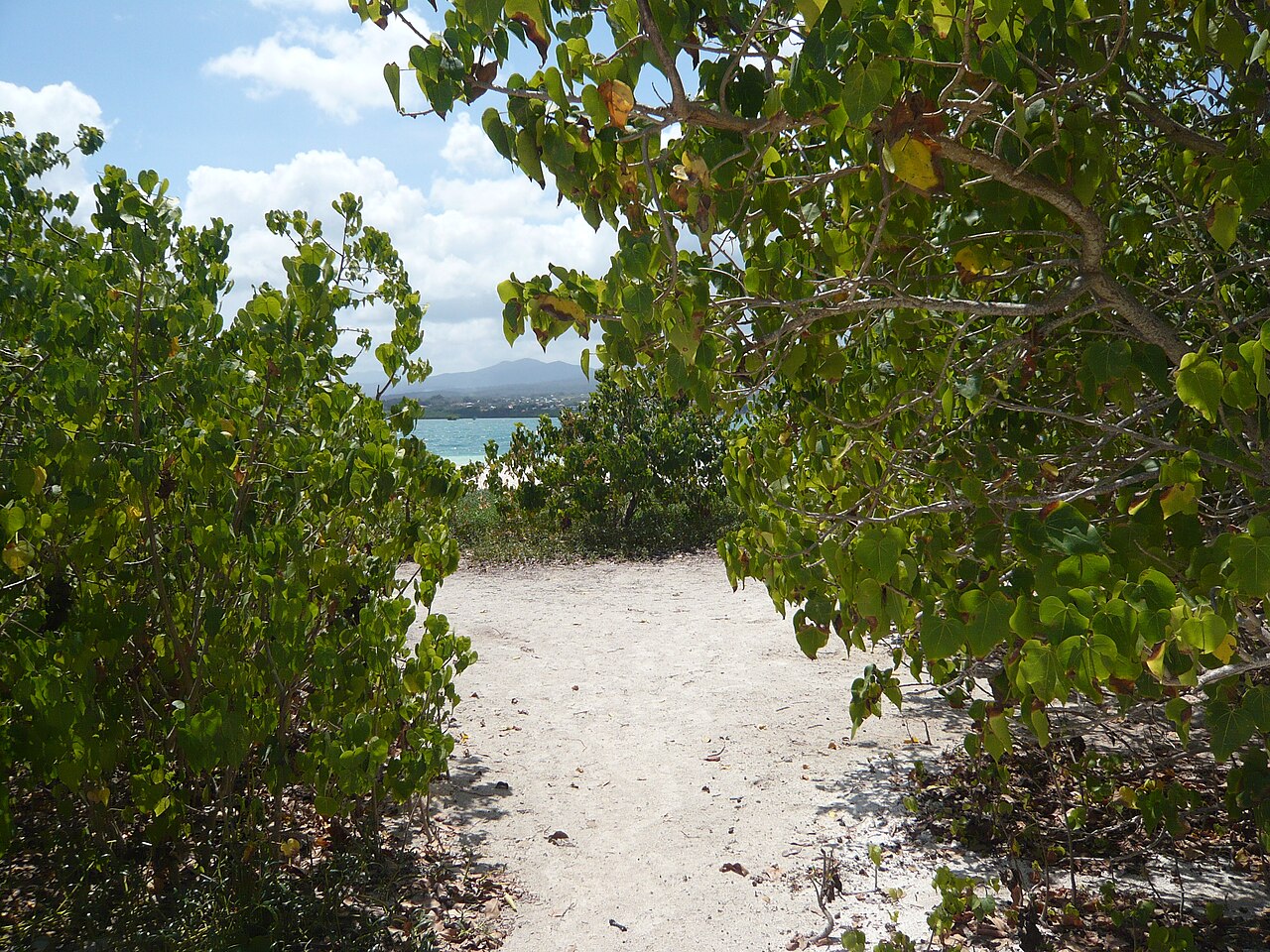
Guadeloupe is an overseas department and region of France in the Caribbean, consisting of six inhabited islands and numerous islets. It is an integral part of France and a constituent territory of the European Union and the eurozone, though not part of the Schengen Area. Its capital is Basse-Terre, while the most populous city is Les Abymes and the main business center is Pointe-à-Pitre. The archipelago was originally called Karukera by Indigenous Arawakan-speaking peoples and was named Santa María de Guadalupe by Christopher Columbus in 1493. Guadeloupe's history includes pre-Columbian settlement, French colonization, plantation slavery, British occupations, and eventual departmental status in 1946.
- population_2024
- 395726
- capital
- Basse-Terre
- official_language
- French
- native_language
- Guadeloupean Creole (Kréyòl Gwadloup)
- currency
- euro
- status
- Overseas department and region of France
Lore & Background
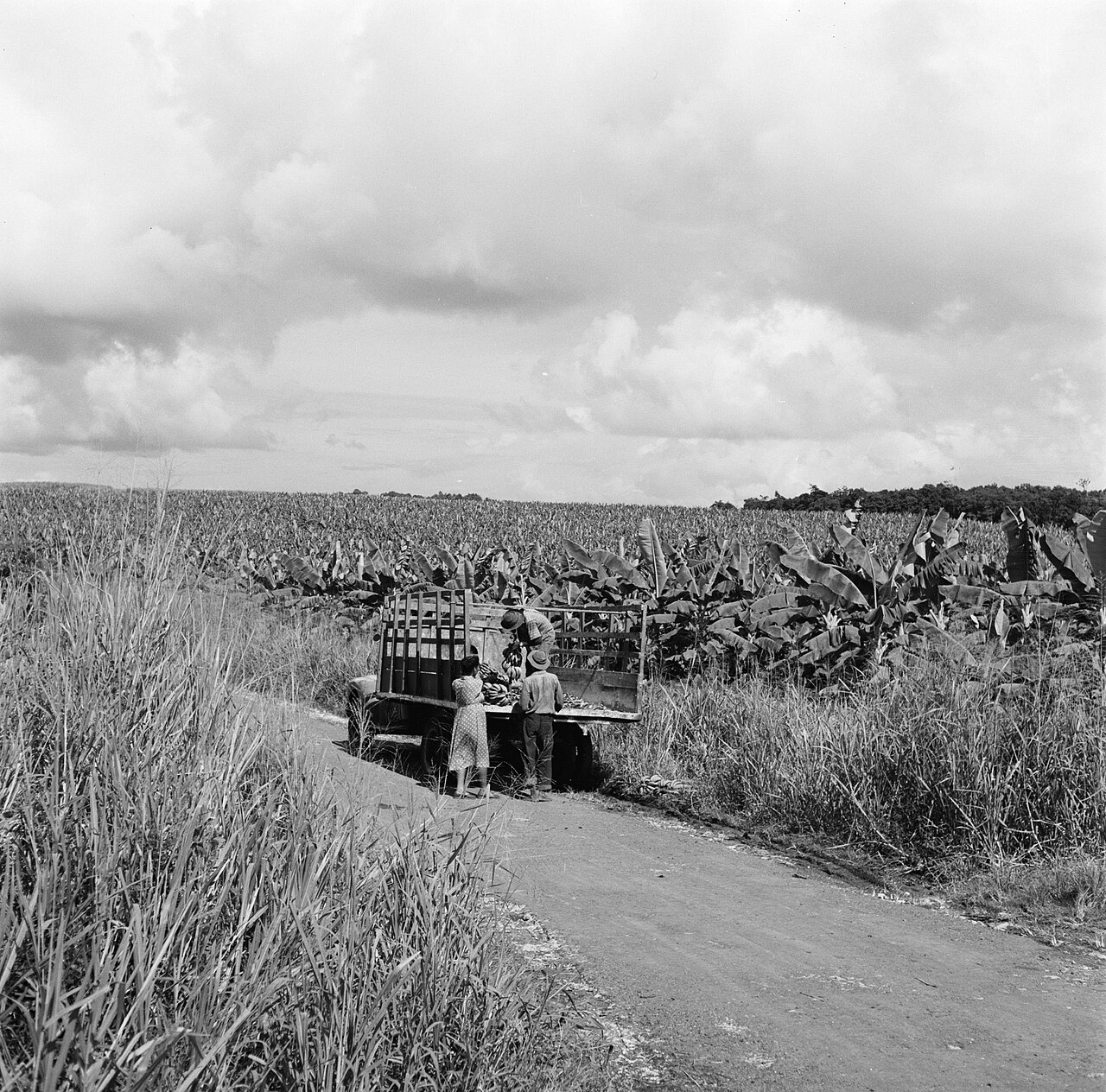
Guadeloupe was first populated by Indigenous peoples possibly as early as 3000 BC, with the Arawak people being the first identifiable group, later displaced by Kalinagos. Christopher Columbus landed in November 1493, giving the island its name. French colonization began in 1635 under the Compagnie des Îles de l'Amérique, leading to the death of many Indigenous people and the introduction of African slaves by 1650. Slave resistance was immediate, including an open uprising in 1656. The sugar plantation economy boomed under the Code Noir from 1685. During the Seven Years' War, British forces occupied the islands until 1763, and the economy expanded so much that France ceded its Canadian colonies to Britain and retained Guadeloupe. The French Revolution brought chaos, with Britain capturing the island in 1794 and the French retaking it later that year; slavery had already been abolished by decree earlier in 1794. Slavery was reestablished in 1802 after a rebellion and mass suicide at the Battle of Matouba in 1802. The British captured the island again in 1810, ceding it to Sweden in 1813, but Sweden never took formal possession. French control was acknowledged in 1815. Slavery was finally abolished in 1848, and indentured laborers from India were brought in after 1854.
Reader's Guide
Guadeloupe's significance lies in its role as a French overseas department that remains an integral part of France and the European Union, yet retains a distinct Creole culture and language. Its history reflects the broader patterns of European colonization, the transatlantic slave trade, plantation economies, and the struggle for emancipation and autonomy. The 1848 abolition of slavery and subsequent indentured labor from India shaped its demographic and cultural landscape. In the 20th century, Guadeloupe became an overseas department in 1946, and later gained greater autonomy in 1982. The 2003 referendum led to the detachment of Saint Barthélemy and Saint Martin in 2007. Modern tensions over social structure, wages, and unemployment erupted in a 44-day strike in 2009, highlighting persistent inequalities relative to mainland France. Guadeloupe's legacy includes its archaeological sites, such as the Morel site with pre-Columbian artifacts, and its unique linguistic heritage, with Guadeloupean Creole spoken alongside French.
Did You Know?
- Christopher Columbus named Guadeloupe after Our Lady of Guadalupe, a shrine in Extremadura, Spain.
- A skeleton found at the Morel site, known as the 'Woman of Guadeloupe', was initially misdated to the Miocene era.
- During the Seven Years' War, France ceded its Canadian colonies to Britain and kept Guadeloupe.
- The islands are locally known as 'Gwada'.
Geographic & Constitutional Setting
The 3rd constituency of Guadeloupe occupies a distinctive position within the French political map. Guadeloupe itself is an insular region of France, situated in the Leeward Islands of the Caribbean. This means the constituency is not merely a domestic French district but a piece of metropolitan governance projected across the Atlantic, connecting voters in a tropical archipelago to the National Assembly in Paris. As one of several legislative constituencies carved out of the region, the 3rd constituency represents a specific slice of Guadeloupe's electorate, channeling local concerns into the broader legislative process of the French Republic. The Leeward Islands location places it in a Caribbean context, yet its constitutional identity remains firmly French, with deputies elected under the same rules as those in mainland France. This dual identity—Caribbean geography, French institutional framework—defines the unique character of representation in this constituency.
Current Representation
Since 2017, the 3rd constituency of Guadeloupe has been represented by Max Mathiasin, who sits in the National Assembly as an unaligned deputy affiliated with the Miscellaneous left grouping. This classification is notable in French parliamentary politics, where most deputies belong to established party groups. The Miscellaneous left category typically encompasses legislators who identify with left-wing principles but do not hold membership in a major party structure. Mathiasin's tenure, beginning in 2017, spans multiple electoral cycles, including the 2022 and 2024 elections, suggesting a sustained presence in the constituency's political life. As an unaligned figure, Mathiasin operates with a degree of independence from party discipline, potentially allowing for more locally responsive legislative work. The fact that this seat has maintained left-wing representation since 2017, even as the broader French political landscape shifts, underscores the constituency's particular political character within the wider Guadeloupean and French context.
Electoral Rhythm & Continuity
The electoral history of the 3rd constituency of Guadeloupe, as documented through official French election records, reveals a consistent pattern of legislative contests at regular intervals. Election results are recorded for 2012, 2017, 2022, and 2024, reflecting the quinquennial rhythm of French legislative elections, with the 2024 vote representing a subsequent cycle. The continuity of these contests, spanning over a decade, indicates that the constituency has remained an active and stable component of Guadeloupe's representation in the National Assembly. Official results, traceable back to records from 2002, provide a longitudinal view of how voter preferences in this particular district have evolved. The fact that the constituency has persisted through multiple electoral cycles without being abolished or redrawn speaks to its established place in the regional political geography. Each election cycle offers a fresh mandate, yet the underlying institutional framework remains constant, anchoring the constituency's role in French democracy.
Institutional Classification & Record-Keeping
The 3rd constituency of Guadeloupe exists within a well-defined institutional framework that governs how French legislative representation is organized and documented. As a French legislative constituency, it operates under the same constitutional and electoral rules as any other seat in the National Assembly, regardless of its Caribbean location. The classification of its current deputy under the Miscellaneous left banner reflects the French parliamentary system's practice of grouping deputies not only by party but also by political orientation, creating a taxonomy that extends beyond simple party membership. Official documentation of this constituency's electoral history is maintained through the Résultats électoraux officiels en France database, which has recorded French election outcomes since 2002. This institutional record-keeping ensures transparency and continuity in tracking how the constituency's representation has changed over time. The formal, bureaucratic architecture surrounding the constituency—its numbering, its classification, its documented results—embodies the French Republic's commitment to structured, accountable democratic representation, even in its overseas territories.
Gallery

Frequently Asked Questions
What exactly is Guadeloupe and where is it located?
Guadeloupe is a French overseas department and region made up of six inhabited islands plus numerous smaller islets in the Caribbean Sea. It functions as an integral part of France rather than a separate country.
What is Guadeloupe's capital and main urban center?
Basse-Terre serves as the official capital, while Les Abymes holds the title of most populous city and Pointe-à-Pitre acts as the primary business hub.
How does Guadeloupe fit into the European Union and currency system?
As a constituent territory of the EU, Guadeloupe uses the euro and falls under eurozone rules, yet it is excluded from the Schengen Area's free-movement framework.
What is the origin of the name Guadeloupe?
Indigenous Arawakan-speaking peoples originally called the archipelago Karukera. Christopher Columbus renamed it Santa María de Guadalupe during his 1493 voyage, and that name eventually shortened to Guadeloupe.
What languages do people in Guadeloupe speak?
French is the sole official language, while Guadeloupean Creole (Kréyòl Gwadloup) remains the widely spoken native language in everyday life across the islands.
More in Miscellaneous 1-24
Elsewhere in the Miscellaneous universe
Spotted an error? Know more?
This is a living reference — every entry is fact-audited, and reader corrections feed straight into our audit queue. Suggest an edit · See this site's audit record