
Pogona
Genus of Australian lizards known for their throat beard and semiarboreal habits.

Virtual-Pano · CC BY 4.0
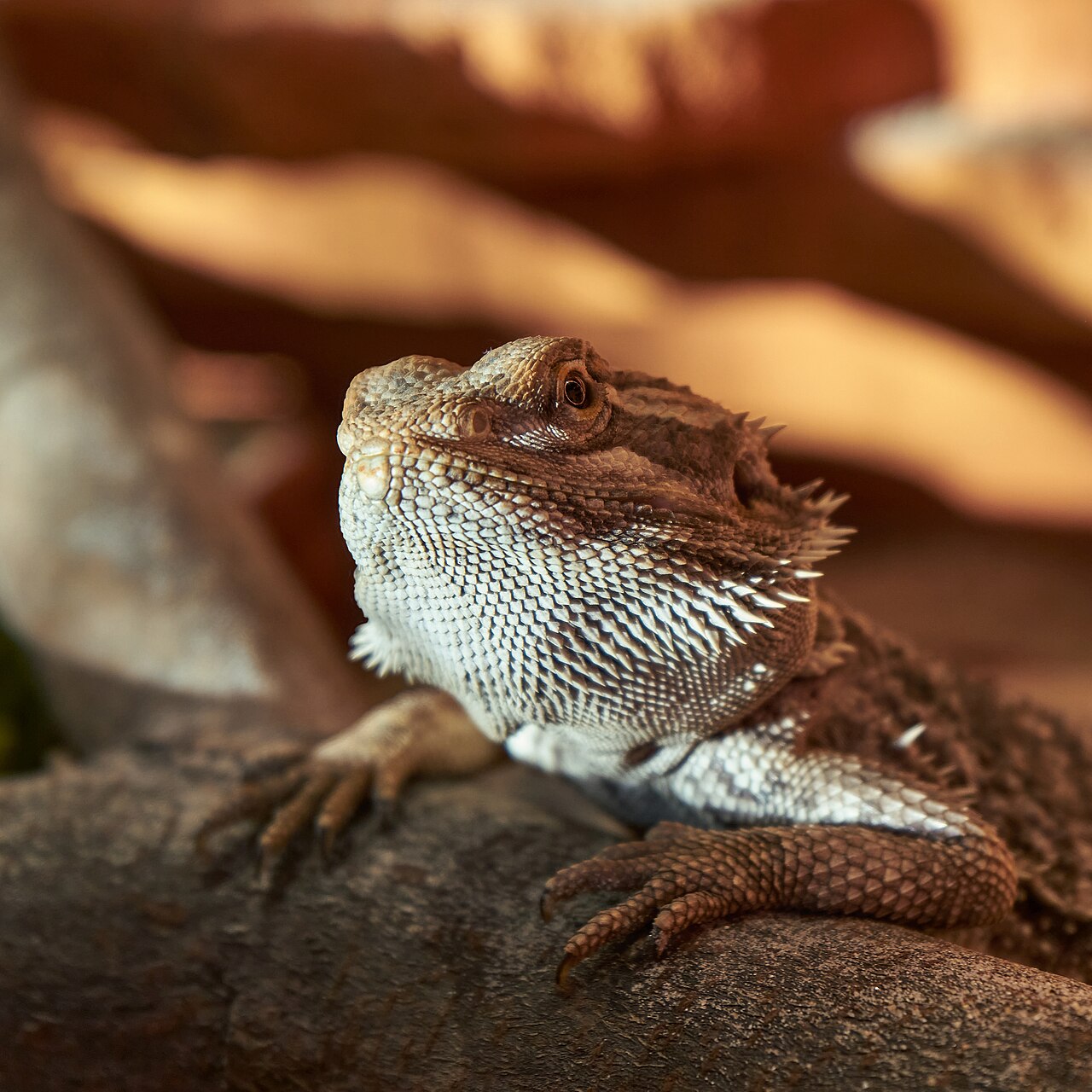
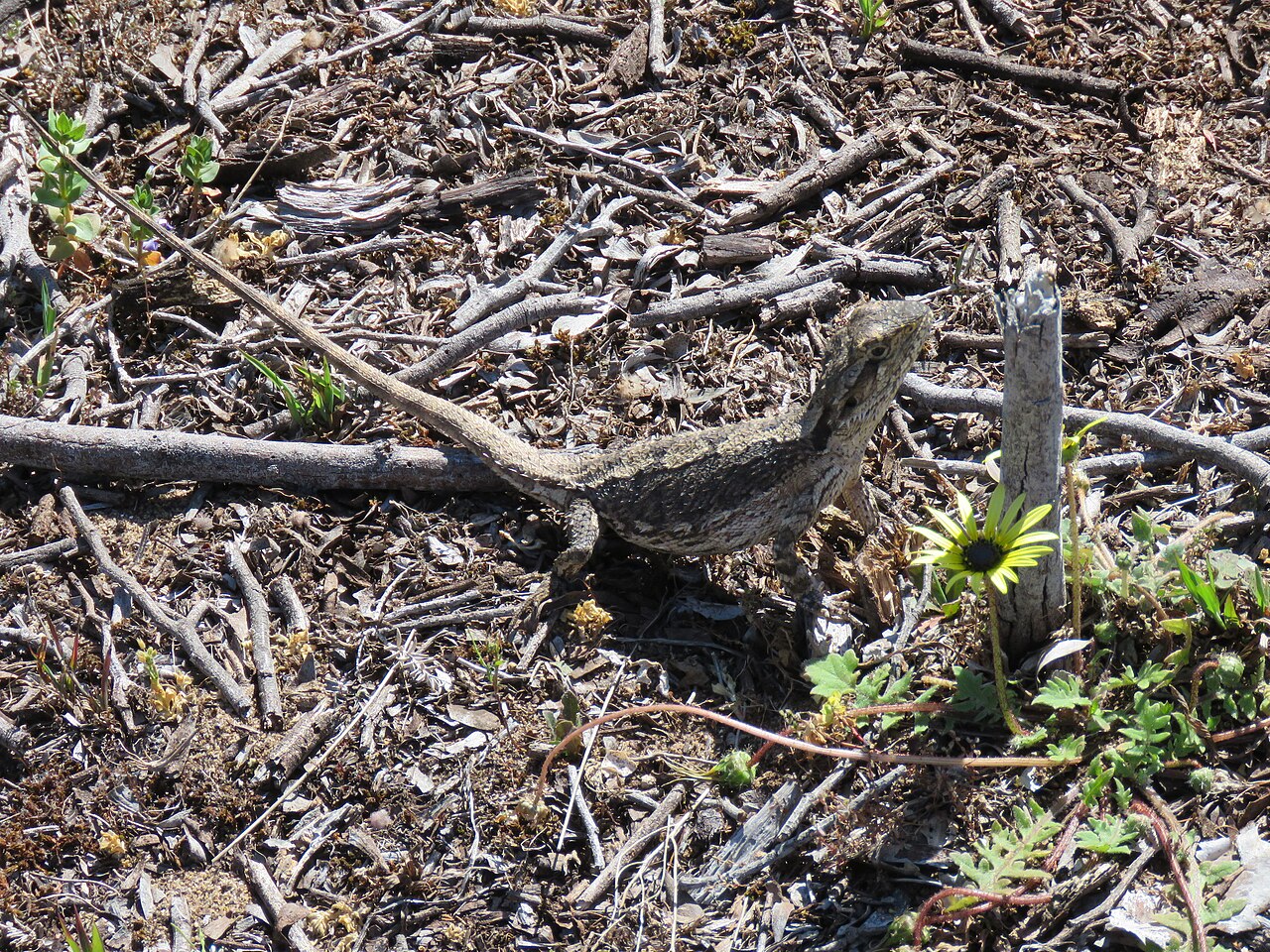
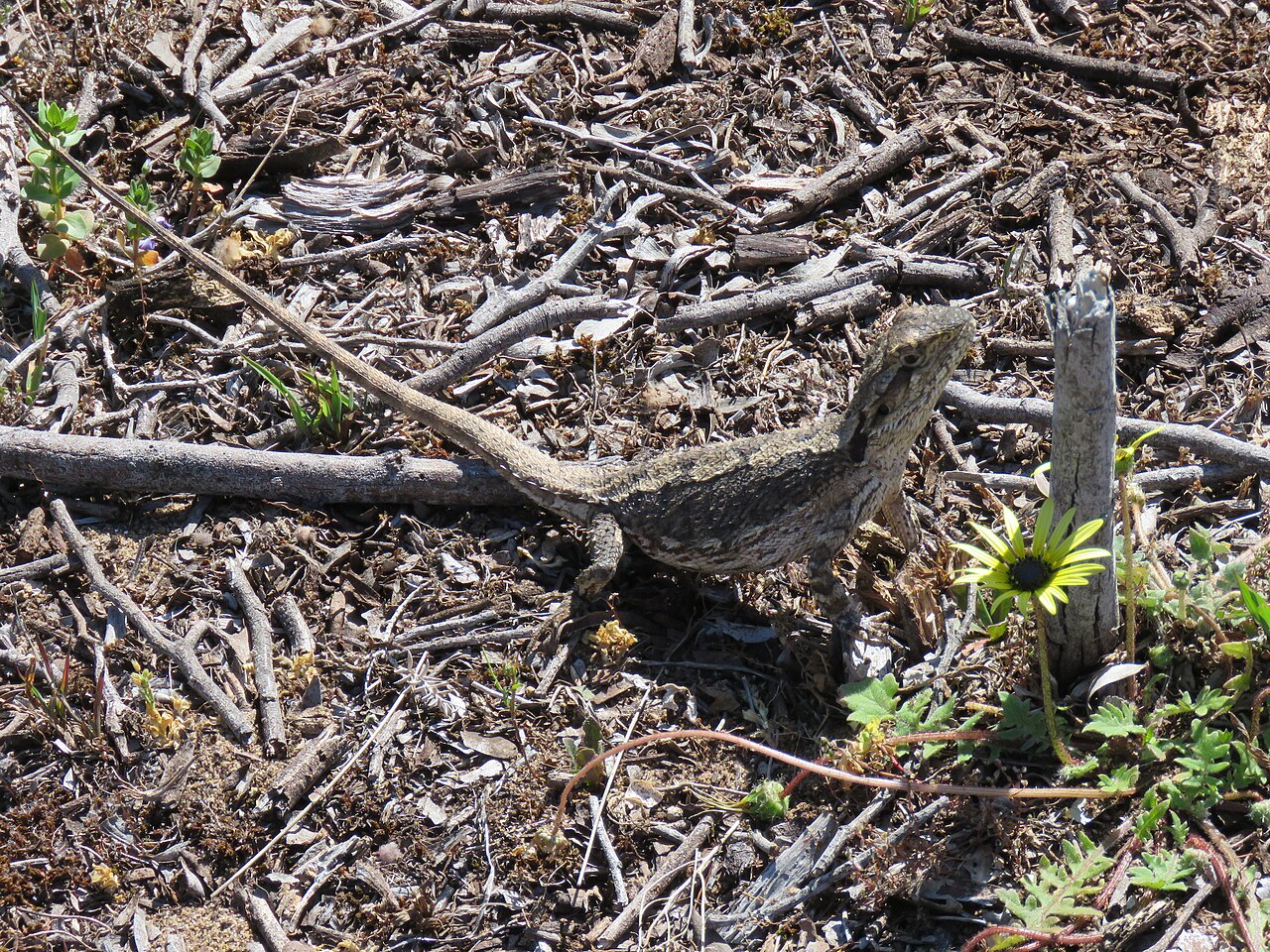
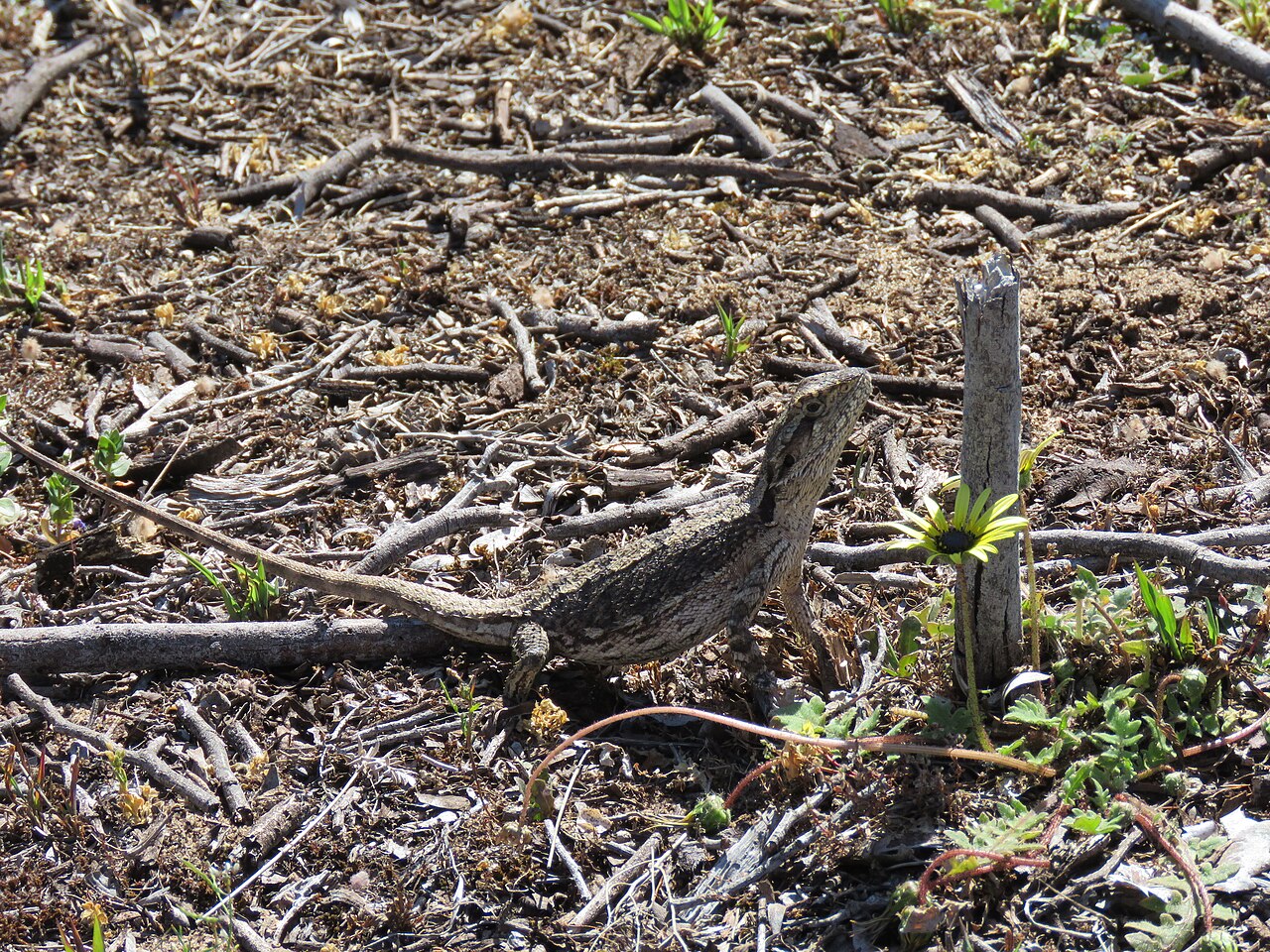
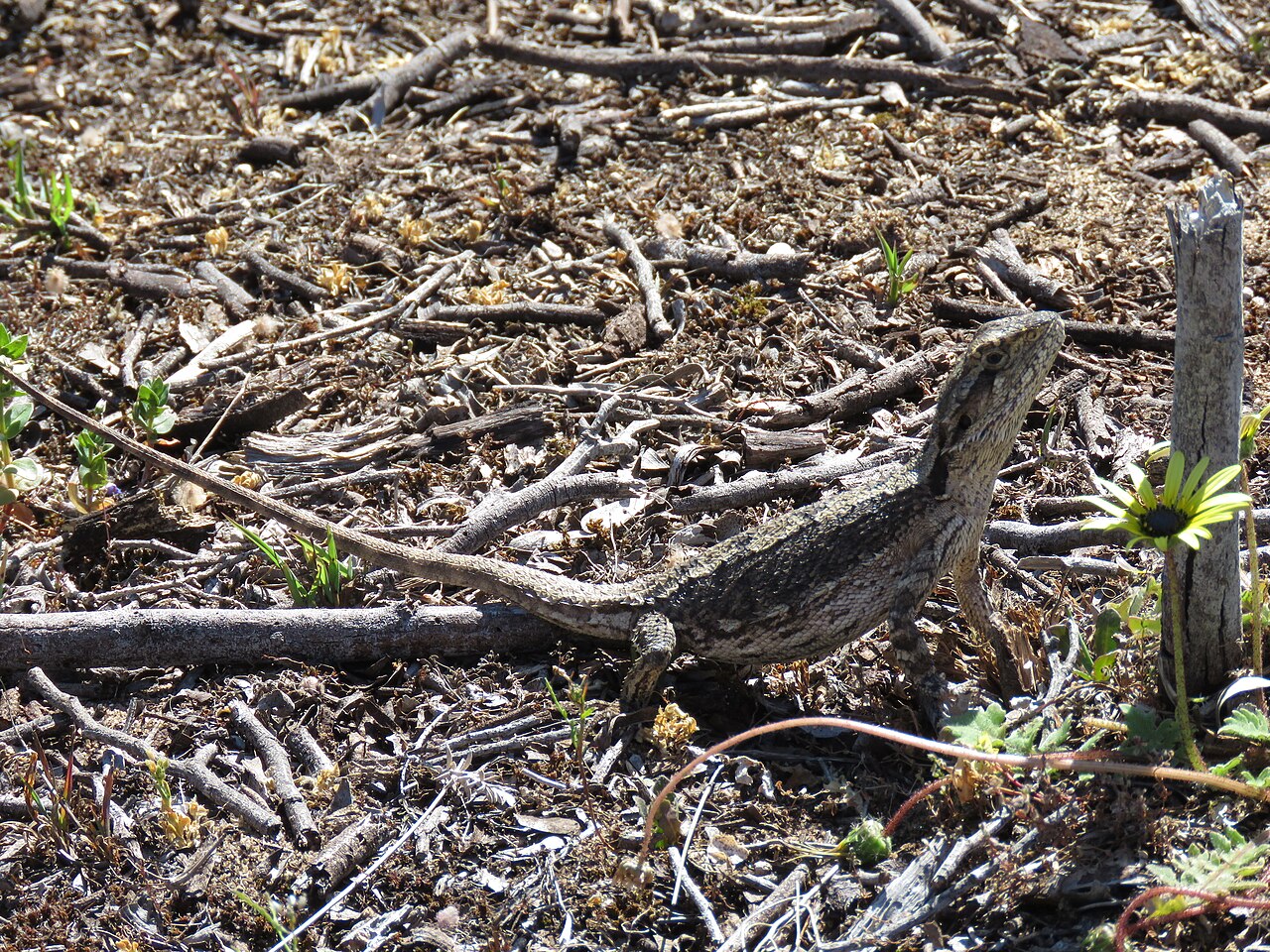
Pogona is a genus of reptiles in the subfamily Amphibolurinae of the lizard group Agamidae, containing eight lizard species commonly known as bearded dragons or beardies. They are found throughout much of Australia, inhabiting woodlands, heaths, deserts, coastal dunes, and shrublands, and are notable for their semiarboreal, diurnal behavior and distinctive throat 'beard' that darkens and inflates during stress, threat displays, or courtship.
- Common name
- Bearded dragon
- Genus
- Pogona
- Subfamily
- Amphibolurinae
- Family
- Agamidae
- Native range
- Australia (eastern states, eastern South Australia, southeastern Northern Territory)
- Habitat
- Woodlands, heaths, deserts, coastal dunes, shrublands
- Maximum male length
- 60 cm (24 in)
- Maximum female length
- 51 cm (20 in)
Lore & Background
Bearded dragons are characterized by broad, triangular heads, flattened bodies, and rows of spiny scales. They display a hand-waving gesture to show submission and head-bobbing to show dominance. Some can slightly change color in response to rivalry or temperature changes. Males grow up to 60 cm long, females up to 51 cm. They possess a unique N-glycosylation resistance mechanism absent in other Australian agamids, making them more resistant to neurotoxic elapid snakes.
Reader's Guide
Pogona species are significant as a widely recognized group of Australian reptiles, often kept in captivity and studied for their unique physiological and behavioral traits. Their temperature-dependent sex determination, where incubation above 31°C can cause sex reversal in genotypic males, provides insight into reptilian developmental biology. The genus also demonstrates complex social behaviors, including territorial aggression, courtship rituals, and submissive gestures, as well as cognitive abilities such as perceiving the Delboeuf illusion—the first evidence of such perception in a reptile. Their brumation patterns and semiarboreal lifestyle further contribute to understanding reptilian adaptation to arid environments.
Did You Know?
- Bearded dragons can perceive the Delboeuf illusion, choosing a smaller plate over a larger one when both hold the same amount of food.
- Incubation temperatures above 31°C can cause sex reversal in bearded dragons, producing females with a male genotype.
- Bearded dragons have a unique N-glycosylation resistance mechanism that makes them more resistant to neurotoxic elapid snakes.
- Females can store sperm in their oviductal crypts and lay two clutches of 11–30 eggs from one mating.
A Small Genus in a Vast Family
Pogona occupies a modest but notable position within one of the most species-rich lizard families on Earth. The Agamidae encompass 582 species spread across 64 genera, making Pogona's six species a relatively small slice of an enormous taxonomic canvas. The family spans Africa, Asia, Australia, and a handful of warmer pockets in Southern Europe, and many of its members carry the evocative common name "dragon" or "dragon lizard." Among the better-known agamids are the domesticated bearded dragon, the Chinese water dragon, and various Uromastyx species, all sharing the same broad lineage. Phylogenetically, agamids may sit as the sister group to the Iguanidae, and the two families even resemble one another in general appearance. Despite this numerical modesty, Pogona's members benefit from belonging to a family that has radiated across nearly every warm landmass of the Old World, giving the genus a deep evolutionary backdrop to draw from.
Built for the Sun
Like fellow agamids, Pogona species are creatures shaped by daylight and warmth. They are generally diurnal, equipped with sharp vision suited to navigating their surroundings during waking hours. Their bodies are supported by well-developed, powerful legs, and unlike geckos or skinks, their tails cannot be cleanly shed and regrown, though a limited degree of tail regeneration has been noted in some agamid species. A particularly useful trait is the ability of many agamid species to shift their coloration to a degree, a mechanism that helps regulate internal body temperature. Males in several species display more vivid coloration than females, and these hues play a role in signaling and reproductive interactions. Because agamids are heliothermic, they depend on basking in sunlight to raise their body temperature to functional levels, a daily ritual that anchors their activity cycles. Their teeth are set on the outer rim of the jaw, a condition called acrodonty, shared with chameleons and the tuatara but unusual among lizards overall.
Laying the Foundation
Reproduction in agamids, and by extension in Pogona, follows a broadly oviparous pattern. Females deposit their eggs in damp soil or within rotting logs, environments chosen specifically to retain the moisture the developing embryos need throughout incubation. For most species in the family, a single clutch contains between four and ten eggs, and the incubation period runs roughly six to eight weeks. In the Leiolepidinae subfamily, a more specialized strategy emerges: all species excavate burrow systems that reach down to moist soil, where eggs are laid in late spring or early summer, or at the onset of the dry season. Those same burrows double as daily or seasonal retreats, offering a way to moderate body temperature and to shelter from predators. While the specific reproductive details of Pogona's six species may vary, they operate within this shared agamid framework of egg-laying, moisture-dependent incubation, and seasonal timing.
Deep Roots in the Old World
The evolutionary story of agamids stretches back almost a hundred million years. The oldest unambiguous agamid fossil, Protodraco, was recovered from mid-Cretaceous Burmese amber in Myanmar, dating to roughly 99 million years ago, and it closely resembles primitive Southeast Asian agamids still living today. A Late Cretaceous specimen from Brazil, Gueragama, has also been tentatively linked to the family, while a Moroccan fossil once thought to be an agamid, Jeddaherdan, turned out to be a young subfossil of the living genus Uromastyx. The family's modern distribution is strikingly Old World: agamids occupy continental Africa, Australia, southern and Southeast Asia, and a few warmer European locales, yet they are entirely absent from Madagascar and the entire New World. This mirrors the opposite pattern of the iguanids, which thrive in precisely those regions where agamids are missing. Pogona's six species inherit this ancient, geographically bounded lineage.
Gallery
More in Miscellaneous 25-32
Elsewhere in the Miscellaneous universe
Spotted an error? Know more?
This is a living reference — every entry is fact-audited, and reader corrections feed straight into our audit queue. Suggest an edit · See this site's audit record